
Free site checkup — no call to sit through, no card

·

WooCommerce vs BigCommerce: Which Store Keeps More of Your Money?

BigCommerce changed its plans and fees in June 2026, so we compared both store platforms again and named our pick.

Updated Sep 17, 2026

By the WP BigBang team

Share this article

Desk cards reading BigCommerce and WooCommerce with a kraft shopping bag between them
On this page
BigCommerce renamed its plans and added a new fee on some payments in June 2026, so many price comparisons you will find are out of date. This WooCommerce vs BigCommerce guide uses the prices and fees we checked on both official sites this September.
Last updated 13 September 2026. Prices checked on bigcommerce.com, woocommerce.com and stripe.com.

Quick answer: BigCommerce or WooCommerce?

Choose WooCommerce if you want to own your store, shape every page and pay no platform fee on sales.
Choose BigCommerce if you want hosting and updates bundled into one plan, and you accept plan jumps as your sales grow.
Still weighing BigCommerce or WooCommerce? Book a free call with the team that builds WordPress stores.

WooCommerce vs BigCommerce: the numbers that decide it

$0

WooCommerce: monthly platform fee, with 0% revenue share on your sales

2.0%

BigCommerce Core: extra fee on sales through a payment provider outside its embedded list

$30K

BigCommerce Core: yearly sales cap before your plan is upgraded for you

$105

BigCommerce Growth: monthly price (billed monthly) of the first plan with abandoned cart emails

WooCommerce vs BigCommerce: the basic difference

One store you own, one store you rent
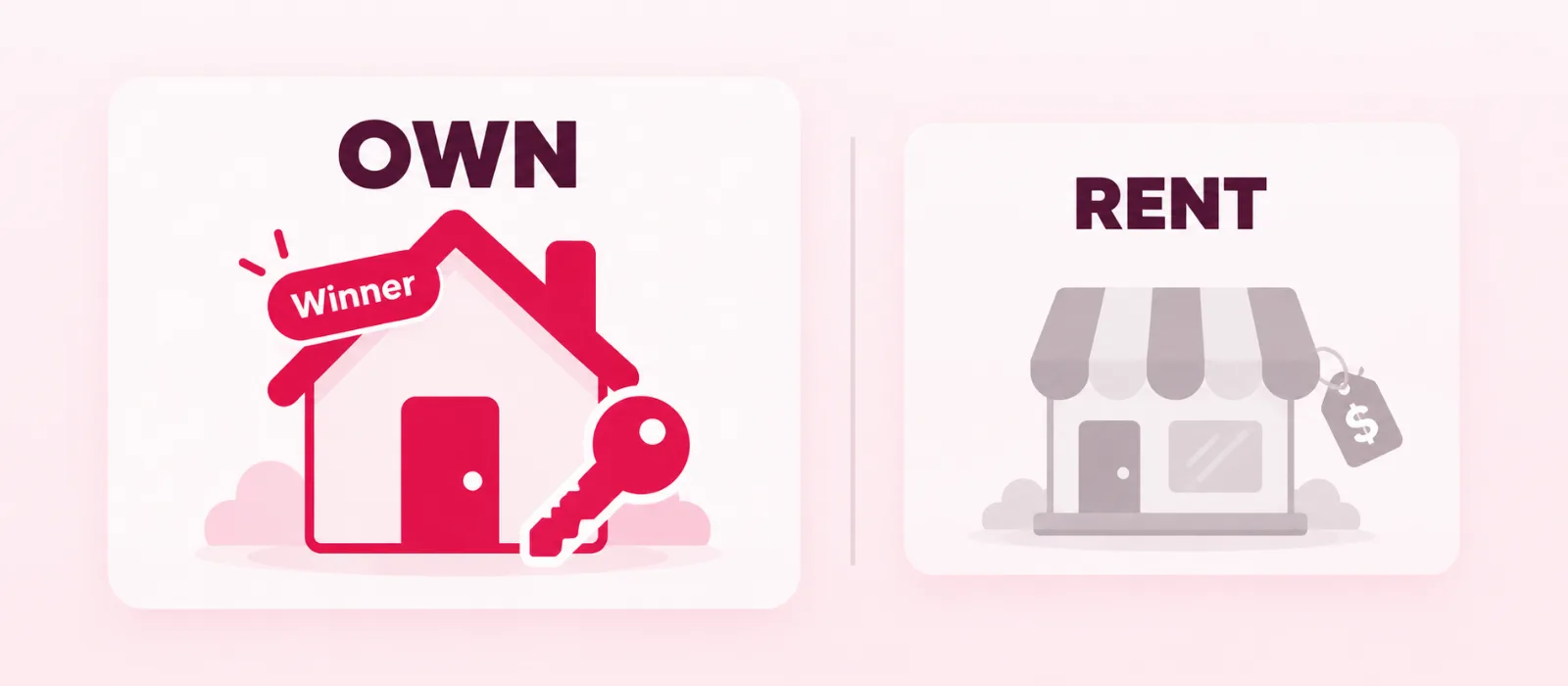
WooCommerce is a free, open-source plugin that turns a WordPress website into an online store. You install it on hosting you choose, so the files, the database and your store data stay with you.
BigCommerce is a hosted store platform. You pay a monthly plan, and BigCommerce runs the servers, security and platform updates for you.
That one difference shapes the rest of this WooCommerce vs BigCommerce comparison. WooCommerce gives you control, ownership and your pick of who does the upkeep. BigCommerce takes the upkeep and sends a bill that rises as your sales grow.
WooCommerce vs BigCommerce as a small wooden house with a brass key beside a monthly bill envelope
Own the store or rent it: the core WooCommerce vs BigCommerce choice.

Ease of use: WooCommerce vs BigCommerce

The easy start has a price tag

You want your hours spent on selling. BigCommerce hands you a hosted store, and its own team runs the servers and platform updates. WooCommerce is a free plugin on a WordPress site: you or your web team pick the hosting once, and from then on the store, the data and the design are yours. We build on WordPress, and we say so up front.

BigCommerce

WooCommerce

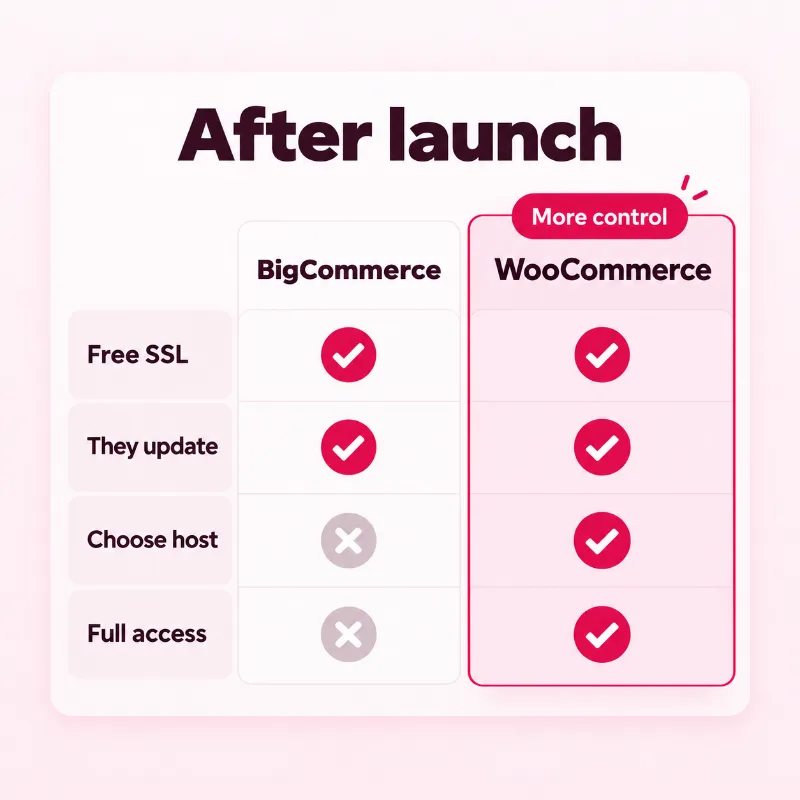
If WooCommerce wins your WooCommerce vs BigCommerce check, decide who runs the updates before launch day. Our WordPress website maintenance checklist lists the monthly jobs, so you can judge the work before you commit.

Total cost: WooCommerce vs BigCommerce by store size

What you pay as your sales grow
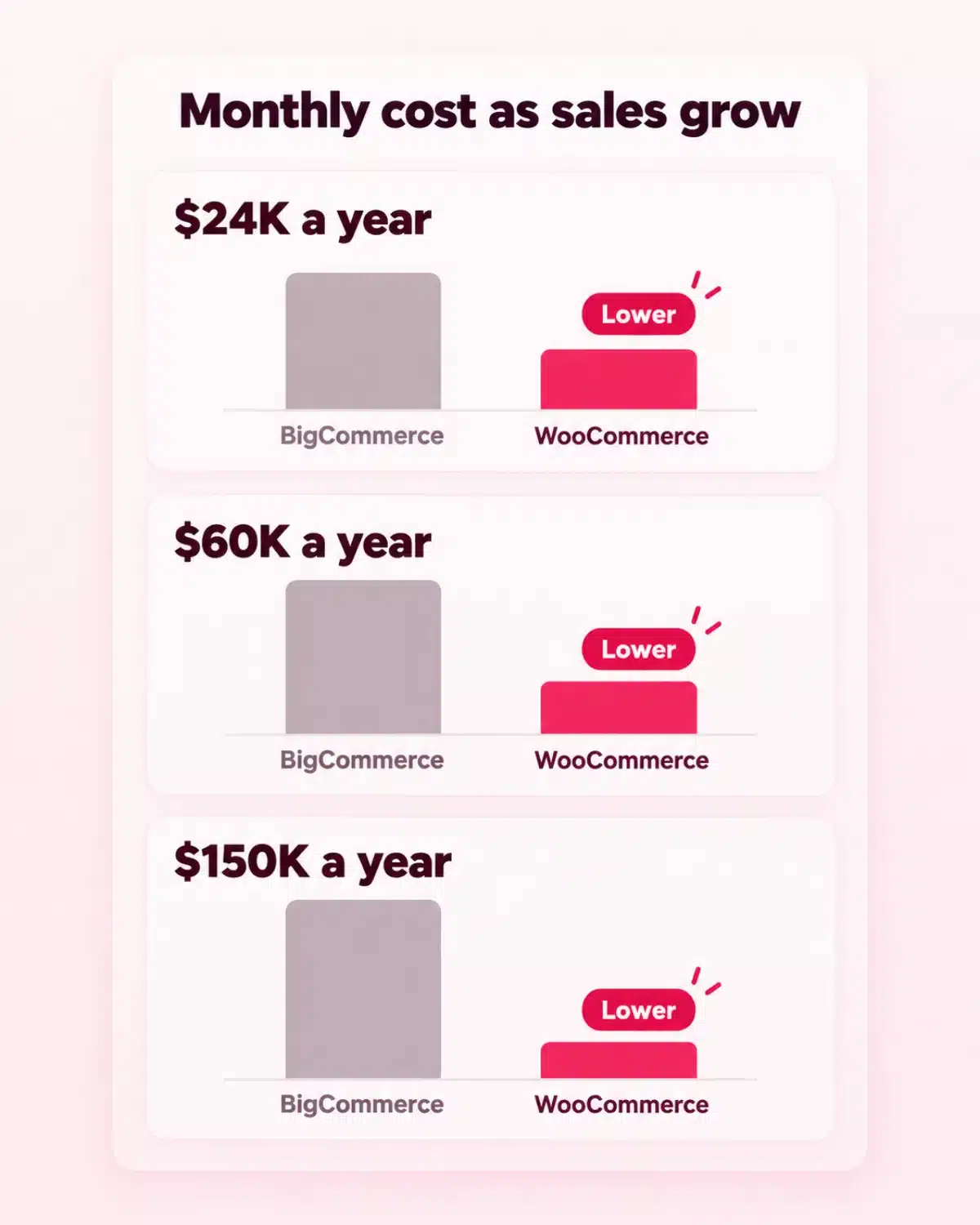
On BigCommerce, your plan follows your sales. Once your store passes a plan’s yearly sales cap, BigCommerce moves you up to the next plan by itself, based on your last 12 months of sales.
Plan and fees for three example stores, checked 13 September 2026
Example store
BigCommerce plan
Extra fee with a non-embedded provider
WooCommerce platform fee
Sells $24,000 a year
Core: $39 a month, or $29 a month billed yearly
2.0%, about $40 a month
$0
Sells $60,000 a year
Growth: $105 a month, or $79 a month billed yearly
1.0%, about $50 a month
$0
Sells $150,000 a year
Scale: $399 a month, or $299 a month billed yearly
0.6%, about $75 a month
$0
Card processing is extra on both platforms. The extra fee applies only to sales through a provider outside BigCommerce’s embedded list.
Card fees land on both sides of a BigCommerce vs WooCommerce bill. Stripe, for example, charges 2.9% + $0.30 per US card sale on either platform.
WooCommerce has no plan fee, and it still costs money to run. You pay for hosting, a domain, any paid extensions and someone’s time for updates. Bluehost, a web host, puts a working WooCommerce store at $200 to $1,500 or more a year.
Under the Core cap, run a WooCommerce vs BigCommerce cost comparison with two totals side by side: the plan fee on one side, hosting and care on the other. Once sales push you onto Growth, the BigCommerce plan fee alone passes $100 a month.
Calculator, receipts and a kraft parcel on an oak desk for a WooCommerce vs BigCommerce cost check
Add up the plan fee, card fees and hosting before you pick.

Payments and transaction fees: BigCommerce vs WooCommerce

BigCommerce vs WooCommerce: the fee hiding inside each sale

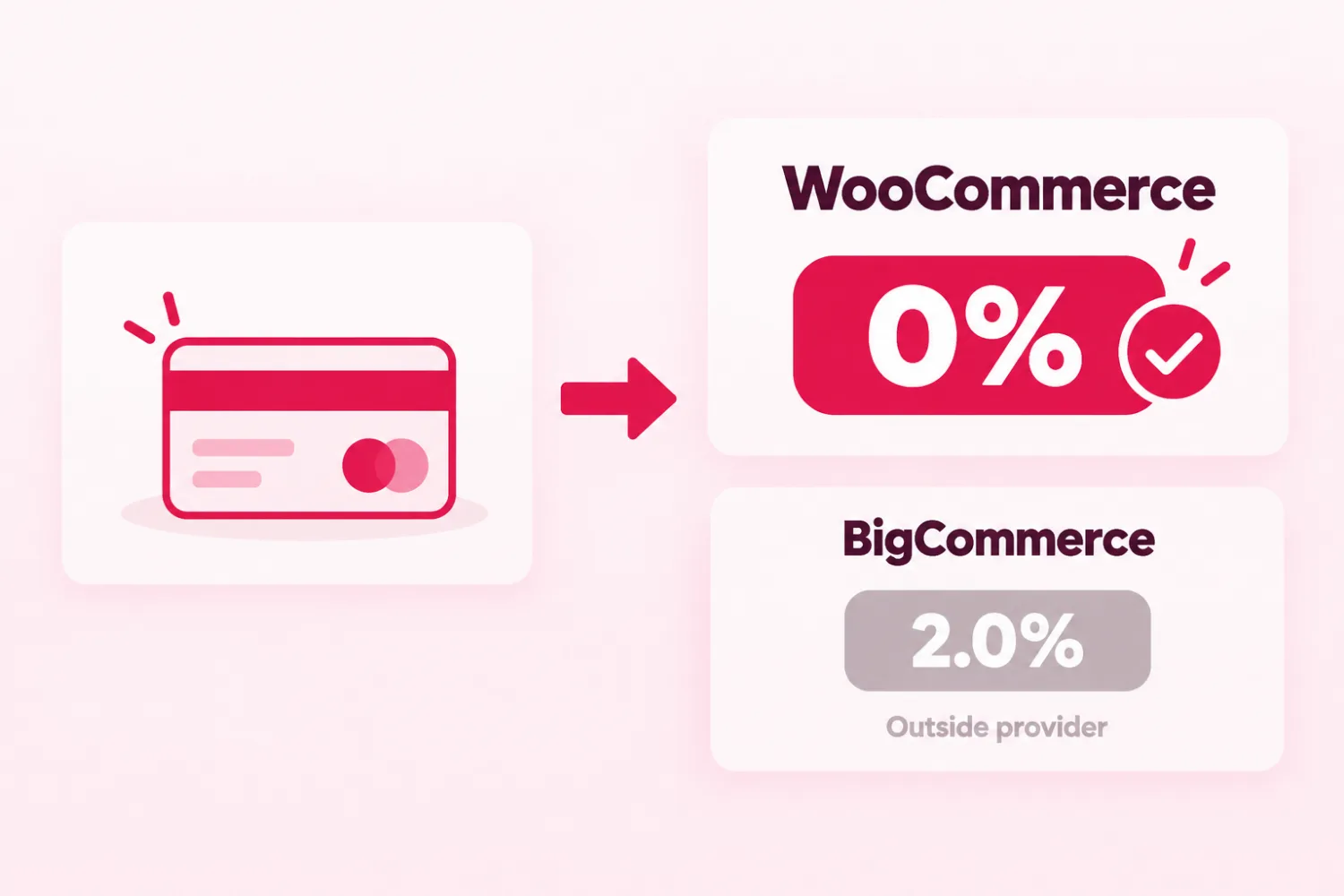
Every sale pays a card fee to your payment provider. On BigCommerce, the provider you pick can add a second fee. BigCommerce builds in more than 20 providers it calls embedded, including Stripe, PayPal and Adyen, and adds nothing on sales through them.
Pick a provider outside that list, and BigCommerce adds its open payment provider fee on those sales on every self-serve plan. In a WooCommerce vs BigCommerce fee check, WooCommerce adds no platform fee with any provider, so you pay your provider’s own rate and nothing more.
Selling abroad? Stripe and WooPayments both add 1.5% for cards issued outside the US, so compare the same provider on both platforms.

Pro tip

Check your payment provider before you compare BigCommerce vs WooCommerce on price. On BigCommerce Core, a provider outside the embedded list adds a 2.0% fee on those sales, on top of card processing.

Features: WooCommerce vs BigCommerce side by side

Built in, or added when you need it

Across a WooCommerce vs BigCommerce feature list, BigCommerce keeps some selling tools for higher plans, such as abandoned cart emails on Growth. WooCommerce starts lean, and you pay only for the extensions you pick. Check what WooCommerce can do for free before you buy extras.
BigCommerce vs WooCommerce at a glance, checked 13 September 2026
BigCommerce
WooCommerce
Hosting
Included, on BigCommerce servers only
Any host you choose, and you can move later
Monthly cost
Core $39, Growth $105, Scale $399 billed monthly ($29, $79 or $299 a month billed yearly)
Plugin $0; hosting, domain and paid extensions extra
Fees on sales
None with embedded providers; 2.0% on Core, 1.0% on Growth, 0.6% on Scale with other providers
0% revenue share and no extra fee for any payment provider
Abandoned cart emails
Only on Growth and above
Through the official AutomateWoo extension
Extra storefronts
Paid add-on per storefront, from $30 a month on Core (up to 3)
A WordPress Multisite network, with extensions to manage the stores
Marketplaces
Amazon, eBay and Walmart channels on every plan
Through marketplace extensions sold on WooCommerce.com
Design freedom
Theme Store themes and a visual Page Builder
Any WordPress theme or page builder, with full code access
SEO control
Page titles, meta descriptions and URLs in the control panel
Titles, descriptions, URLs and rich-result markup through a plugin such as Rank Math
Store ownership
Your store runs on BigCommerce's platform
Files, database and store data on hosting you control
Blog and content
Built-in blog with a visual editor
Full WordPress publishing, categories and SEO plugins
Best for
Owners who want everything bundled and have nobody for updates
Most small stores: owners who want to own the store and choose every part

Want a WooCommerce store without the tech work?
Still torn: BigCommerce or WooCommerce? Talk it through with the team that builds WordPress stores.
Blog post on a laptop and a product page on a phone, BigCommerce vs WordPress for content
WordPress keeps your blog and your shop on one site, under one design.

SEO and blogging: BigCommerce vs WordPress

BigCommerce vs WordPress: let your articles bring buyers in

A buying guide or how-to post can reach shoppers before they pick a product. WordPress started as a publishing tool, so a WooCommerce store gets full blog pages, categories and an SEO plugin such as Rank Math on the same site as your products.
BigCommerce stores include a built-in blog too, with a visual editor and SEO fields for each post. Neither platform ranks a store by itself: Google ranks pages that answer the search well. If content is how you plan to win customers, WooCommerce wins this part of the WooCommerce vs BigCommerce match-up. WordPress gives your writers more room, and our WordPress SEO team can set it up with you.

Design and customization: WooCommerce vs BigCommerce

Make the shop look like you
Your store should feel like your brand from the first click. BigCommerce vs WordPress comes down to a store builder with its own themes, or a full website system where the shop is one part. With WooCommerce, your product pages, blog and service pages share one design, and our team can build a WooCommerce store around your brand.
BigCommerce does offer a plugin that brings its store into WordPress. Its WordPress.org page warns it has not been tested with the last three major WordPress releases, so check its update history before you rely on it.
Laptop on an oak desk showing a branded online shop built with WooCommerce
WooCommerce runs inside WordPress, so your shop, blog and pages share one look.

With WooCommerce, you own the store. With BigCommerce, you rent it, and the rent rises with your sales.

Scalability and uptime: WooCommerce vs BigCommerce

Room to grow without starting over
Growth feels different on each side of the WooCommerce vs BigCommerce choice. On BigCommerce, the servers are its job, and your bill steps up plan by plan as sales rise. Past Scale, the Performance plan has custom pricing from $1,499 a month, billed yearly.
On WooCommerce, you grow by giving the store stronger hosting, caching and a lean set of plugins. Big catalogs and busy sale days need planning, and that planning is your team’s job or ours.
BigCommerce promises 99.99% uptime on its own comparison page. With WooCommerce, you pick a host whose uptime terms you like, in writing, and you can move hosts if it falls short.
Kraft shipping boxes stacked in rising heights on an oak shelf, a store growing on WooCommerce
On WooCommerce, a growing store needs stronger hosting, not a pricier plan.

B2B and multi-channel selling: BigCommerce or WooCommerce

Selling to businesses, marketplaces and more than one store

This is where BigCommerce earns its fee. Every plan connects to Amazon, eBay and Walmart, Growth adds customer groups and segmentation, and you can add extra storefronts to one account.
WooCommerce reaches the same places through extensions for wholesale pricing and marketplace feeds. You pick only the ones you need, and none of them adds a WooCommerce platform fee to your sales. If most of your buyers are trade buyers across several brands, BigCommerce is a fair pick for this part of BigCommerce vs WooCommerce.

Security and maintenance: WooCommerce vs BigCommerce

Who keeps your store safe after launch?

A store that goes down or gets hacked stops taking orders. Before you settle WooCommerce vs BigCommerce, decide who watches for that.

BigCommerce

WooCommerce

Brass padlock on a closed laptop, keeping a WooCommerce store safe after launch
Our WordPress security best practices guide covers the basics you can do yourself. If you would rather hand off the updates and backups, a care plan puts them with our team.

Apps and extensions: BigCommerce vs WooCommerce

The bigger toolbox belongs to WordPress

WordPress.org calls its plugin directory the largest directory of free and open-source WordPress plugins, and WooCommerce sells official extensions on top. If you need a feature, expect to find a plugin for it.
BigCommerce runs its own App Marketplace, built for its platform, with fewer options to choose from. Whichever way your WooCommerce vs BigCommerce decision goes, every app or plugin is one more bill and one more thing to check, so add only the ones you use.

Changing platforms later

Switch later without losing your customers

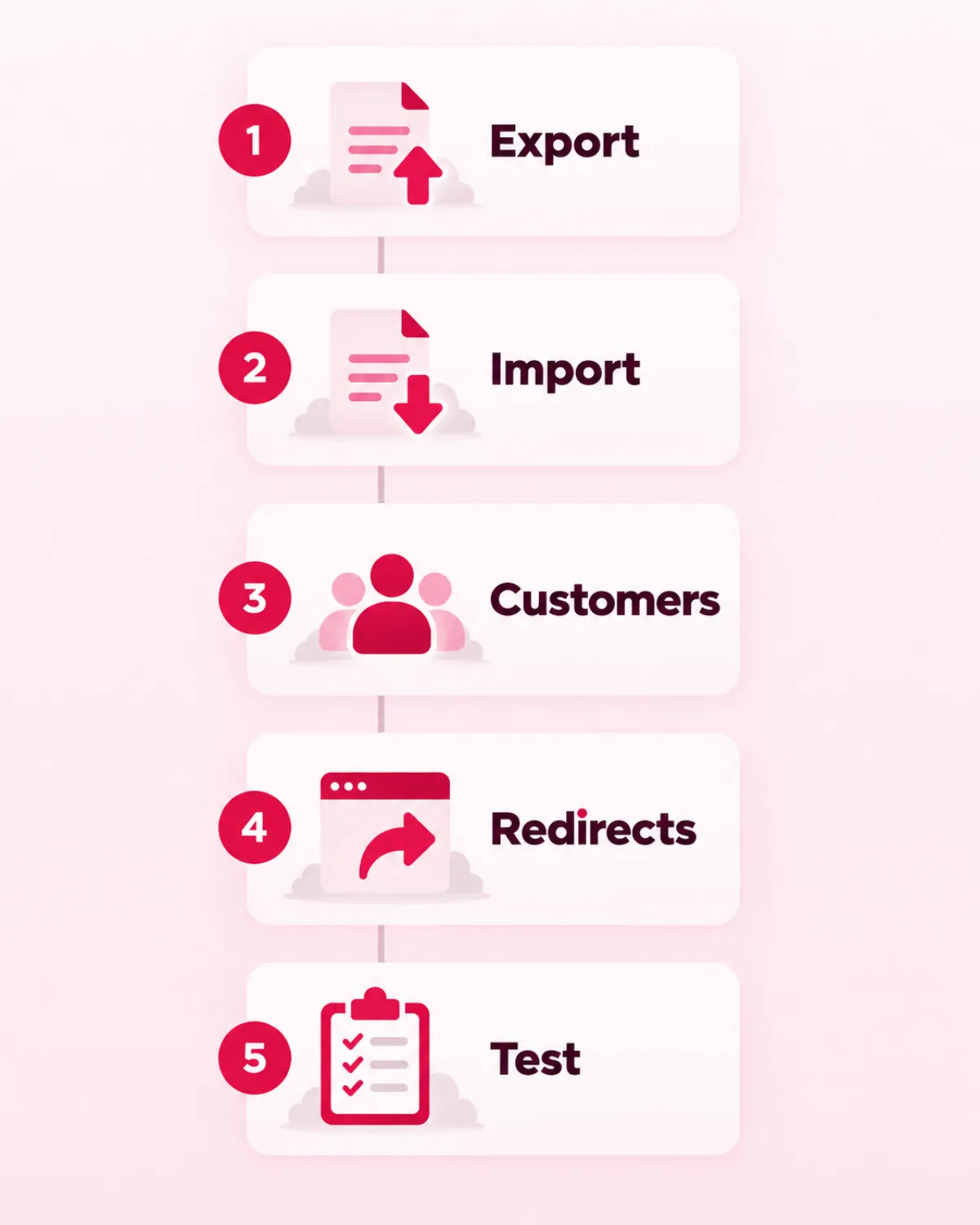
Your WooCommerce vs BigCommerce choice can change later, and a clean move takes planning. A BigCommerce to WooCommerce move runs in five steps.
1

Export your products

In BigCommerce, go to Products, then Export, and save the file as CSV.
2

Import them into WooCommerce

The built-in CSV importer adds products and variations in bulk.
3

Move customers and orders

The built-in importer handles products only, so use a store-moving tool or a web team for customers and past orders.
4

Set 301 redirects

Point each old page address to its new one. Google advises keeping these redirects for at least a year.
5

Test before you switch the domain

Place test orders, check tax and shipping, and read every order email.
Packed kraft boxes and a laptop with a blank spreadsheet, moving a store from BigCommerce to WooCommerce
Products move by CSV; customers and orders need a store-moving tool.

BigCommerce or WooCommerce: our verdict

So which store should you build?

Pick the platform that fits how you want to work in two years, as well as today. After this WooCommerce vs BigCommerce check, we pick WooCommerce for most small stores, because you own the store and pay no platform fee on sales. BigCommerce fits a smaller group: owners who want everything bundled and have nobody to handle updates.
Three example stores (made up, to show the thinking)
A candle maker selling about $2,000 a month who already blogs on WordPress. WooCommerce. The shop joins the site she already has, and her posts keep bringing readers to her products.
A parts supplier with no web person, also selling on Amazon and eBay. BigCommerce. Marketplace channels come with every plan, and nobody has to run updates.
A clothing brand heading past $100,000 a year. WooCommerce. On BigCommerce this store moves up to the Scale plan. On WooCommerce there is no plan jump, so the budget goes to strong hosting and a care plan.

Go with BigCommerce if…

Our pick for most small stores

Go with WooCommerce if…

Shopify on your list too? Read our WordPress vs Shopify comparison.

Picked WooCommerce?

What happens after you say yes

If WooCommerce comes out ahead in your WooCommerce vs BigCommerce comparison, our team can handle the build and the upkeep for you. WP BigBang is a WordPress-only team with 500+ websites built.
1
We look at your products, payment provider, shipping and sales goals.
2

The right setup

We choose hosting and a payment provider with you and compare their fees.
3

Design and build

We design the store around your brand and build it on WordPress and WooCommerce.
4

Test the checkout

We place test orders and check taxes, shipping and every order email.
5

Hand over

The files, the database and the domain are yours the day the store is finished. A care plan stays your choice.
Open kraft box with tissue paper and a packing slip, a test order for a new WooCommerce store
Test orders first.
Brass key and a blank card on a closed laptop, a finished WooCommerce store handed to its owner
Then the keys are yours.

Frequently asked questions

WooCommerce vs BigCommerce questions, answered

Is WooCommerce free?

Yes, the WooCommerce plugin is free and open source. A working store still pays for hosting, a domain, any paid extensions and card processing, such as WooPayments at 2.9% + $0.30 per US card sale.
Not always. BigCommerce Core costs $39 a month billed monthly, and abandoned cart emails need the pricier Growth plan. A WooCommerce store has no plan fee and no revenue share, so a small shop with few paid extensions can cost less each month.
BigCommerce adds no fee on sales paid through its embedded providers, such as Stripe and PayPal. With other providers it adds a fee, from 2.0% of sales on Core down to less on the bigger plans. WooCommerce adds no platform fee and no extra fee for any provider, so this is the first BigCommerce vs WooCommerce cost to check.
For a small business weighing WooCommerce vs BigCommerce, WooCommerce suits most owners who want to own their store, keep a blog and avoid platform fees on sales. BigCommerce suits a smaller group: owners who want one monthly bill and have nobody to handle updates.
Neither platform ranks a store by itself, and both let you edit page titles, descriptions and URLs. In a BigCommerce vs WordPress match-up, WordPress adds the stronger blog and SEO plugins such as Rank Math, so WooCommerce suits stores that plan to win customers with content.
The main BigCommerce vs WordPress difference: WordPress runs your whole website, and the WooCommerce plugin adds the store to it. BigCommerce is a hosted store platform on its own. You can connect BigCommerce to WordPress with a plugin, but check its update history first.
On a paid plan, you contact BigCommerce to cancel the store. Export your products and orders from the control panel first, so you keep a copy. A WooCommerce store stays on your own hosting for as long as you pay your host.
Yes. Export your products from BigCommerce, import them with WooCommerce’s CSV importer, and use a store-moving tool for customers and orders. Then set 301 redirects, permanent forwards from each old link to its new page, so bookmarks and Google still find you.
Picture of Written by the WP BigBang team
Written by the WP BigBang team

We design and build affordable WordPress websites for small businesses, helping you look professional, get found online and grow with confidence.

Related articles

We compared Joomla and WordPress on ease, add-ons, SEO, security, support dates and moving costs, and named the…

Sep 17, 2026

We compared Drupal and WordPress on ease, cost, performance, security and support dates, added Joomla to the table,…

Sep 17, 2026

We compared Elementor, Divi and WPBakery on price, ease, store pages and what happens when you stop paying,…

Sep 18, 2026

Ready to launch something great?

Get a professional WordPress website for your business, without the big agency price tag.